Hallux valgus develops over years: the big toe joint migrates outwards, and the toe itself turns towards the middle of the foot. What causes the most discomfort is rarely the shape, but the pressure. This is exactly where the shoe determines whether a day will be pleasant or not. Let me say this upfront: a shoe does not treat anything or reverse it. However, it can ensure that nothing presses on the joint anymore, and that makes a noticeable difference in everyday life.
How hallux valgus develops
The foot carries the entire body weight every day, moving through the heel and back out through the ball of the foot. If the transverse arch in the forefoot is weakened, it collapses, the metatarsal bones splay, and the big toe turns outwards. This happens slowly, often over decades. Inherited foot shape, connective tissue, hormonal changes, and simply the time we spend in shoes that are too narrow play a role. Women are affected significantly more often than men, partly because women's shoes are traditionally cut narrower in the forefoot.
Once the misalignment is there, it does not go back on its own. What can be influenced is the pressure from the outside and the mobility of the joint. That is exactly why almost every consultation begins with the same question: Does the shoe fit in width, or does only the length fit?
Four features that matter
Once you know what to look for, you can recognize suitable models on the shelf. These four points make the difference:
| Feature | Why it matters | How to recognize it |
|---|---|---|
| Wide forefoot | The joint needs room to the side, not more length | The sole is wide and rounded at the front, not pointed |
| Soft upper material | Hard leather presses exactly on the spot that already hurts | The leather gives way under thumb pressure, stretch material over the ball |
| Flat heel | Every centimeter of heel pushes the weight forward onto the ball of the foot | The heel and forefoot are almost at the same height |
| Removable footbed | Room for your own insoles without it becoming tight on top | The insole can be pulled out with a finger |
Wide H or Wide K, that is the real question
Buying one size larger does not help with hallux valgus. This makes the shoe longer, but not wider, and the foot slides forward. What helps is a different width. Width H is the comfort width, Width K is significantly wider. Both are made on their own lasts. If you have seen footprints in the leather at the ball line so far, you are right with Width H, if you still feel pressure there, choose the extra wide models in Width K.
The five most common mistakes when buying shoes
In the consultation in the store in Buchholz, we see the same points again and again. They cost nothing if you know them, and a lot of comfort if you don't.
- One size larger instead of one width wider. The foot slides forward, the toes still bump into each other.
- Try on in the morning. Feet get larger during the day. If you try on in the afternoon, you buy more realistically.
- Only check while standing. Only when rolling off does it show whether the joint bumps against the leather.
- Hope for it to break in. Soft natural leather gives way, but a last that is too narrow will not get wider.
- Forget your own insole. If you wear insoles, you must have them with you when trying on, otherwise the height will not be right.
Closed models for everyday use
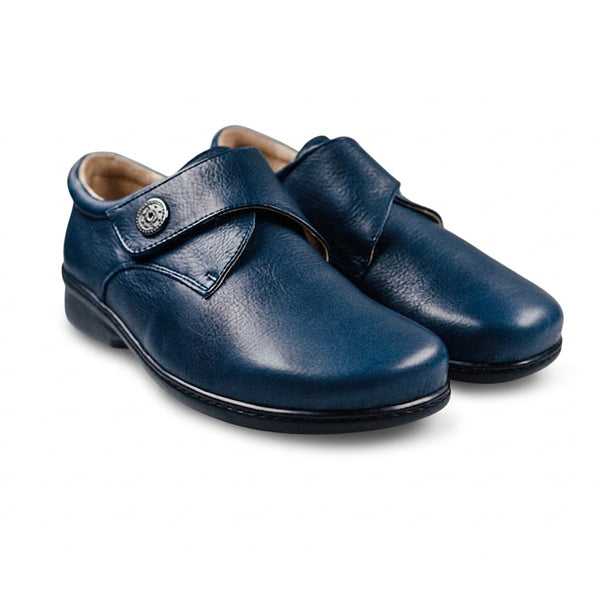
For everyday use, shoes with stretch material over the ball are the easiest solution: they give way exactly where the joint is. The MN-Comodin in black is the most purchased model of this type, the same cut is available as MN-Comodin in navy. The MN-Lucia in red falls a little more feminine, which is also available in navy and khaki.
For autumn and winter: closed up to the ankle
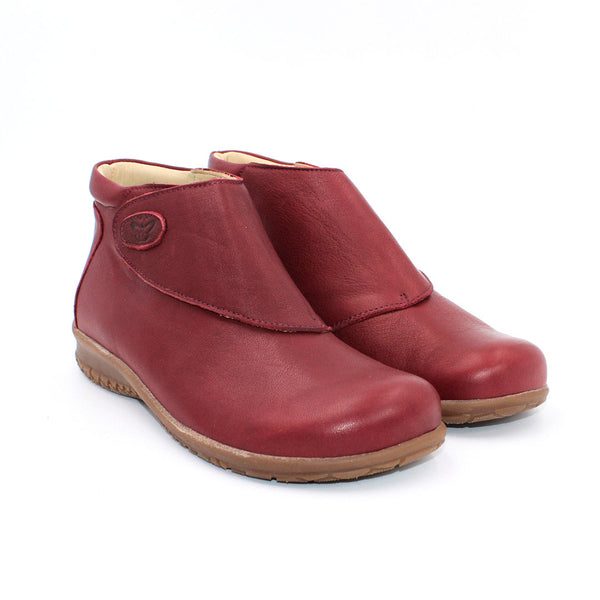
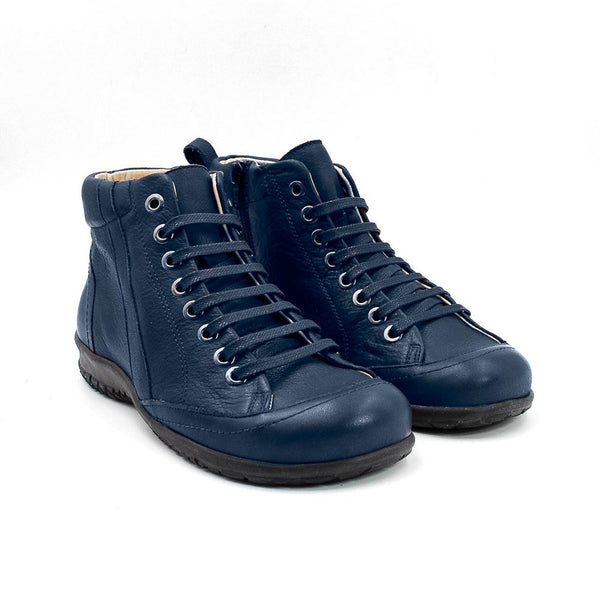
When it gets cooler, ankle boots are the better choice, as long as they do not constrict at the instep. The MN-Leonor comfort ankle boot in black and the variant in burgundy open via a side zipper, the MN-Lua in burgundy additionally has more height at the instep and therefore also fits with a high instep.
For warm days: open, but not wobbly
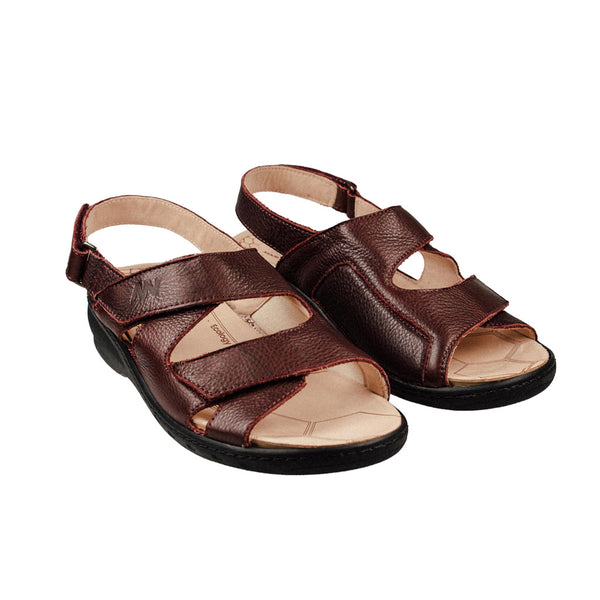
Sandals are often more comfortable than closed shoes with hallux valgus, because nothing rests on the joint. It is important that the foot is still supported. The MN-Cloe in black has three Velcro fasteners, with which the width can be adjusted throughout the day, it is also available in red and burgundy.
The models at a glance
| Model | Type | Special feature | Price from |
|---|---|---|---|
| MN-Comodin | Closed half shoe | Stretch material over the ball | 159 euros |
| MN-Lucia | Closed half shoe | Zipper, Width H | 159 euros |
| MN-Leonor | Ankle boot | Side zipper | 159 euros |
| MN-Lua | Ankle boot | More height at the instep | 179 euros |
| MN-Cloe | Sandal | Three Velcro fasteners for adjustment | 119 euros |
Your own insoles and the footbed
If you wear orthopedic insoles, you need shoes where the footbed can be completely removed. All models under Shoes for orthopedic insoles are designed this way. The included natural leather footbed can then simply be exchanged for your own insole. If you want to walk barefoot in between, you take it out and gain additional height.
Natural leather works with you if you let it
Vegetable-tanned leather behaves differently than coated industrial leather. It absorbs moisture, releases it again, and shapes itself to the foot in the first few weeks. With hallux valgus, that is the real advantage: The leather curves over time at the spot where the joint is, instead of resisting it. For this, it needs two things, namely wearing time and care. Wear new shoes for two to three hours a day, then let them rest for a day, and treat the leather with grease or balm every few weeks. How exactly that works is explained in our guide to leather care.
What you should avoid: drying shoes on the heater, putting them away wet, or treating them with silicone sprays. All three make the leather hard, and hard leather presses again.
Frequently asked questions
Can a shoe reverse hallux valgus? No. The position of the bones is not changed by a shoe. It can prevent additional pressure from developing, and thus significantly reduce discomfort.
Are barefoot shoes suitable for hallux valgus? Often yes, because the toe box is wide and the sole is flat. A slow transition is important. You can find a selection under Barefoot shoes.
What about toe spreaders? They keep the joint mobile and are often worn in the evening. They do not replace a suitable shoe, but complement it.
Do I always need an insole? No. Many people manage well with a wide shoe and the included footbed. If you have a medically prescribed insole, you should, however, be able to use it without the shoe becoming tight.
What else the foot needs
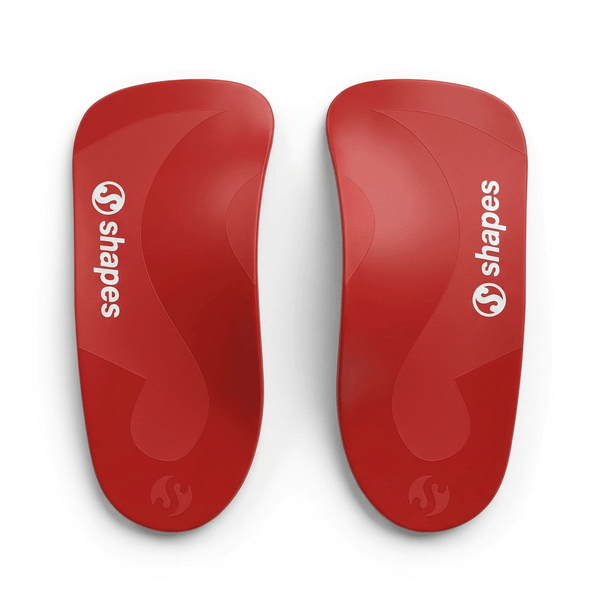
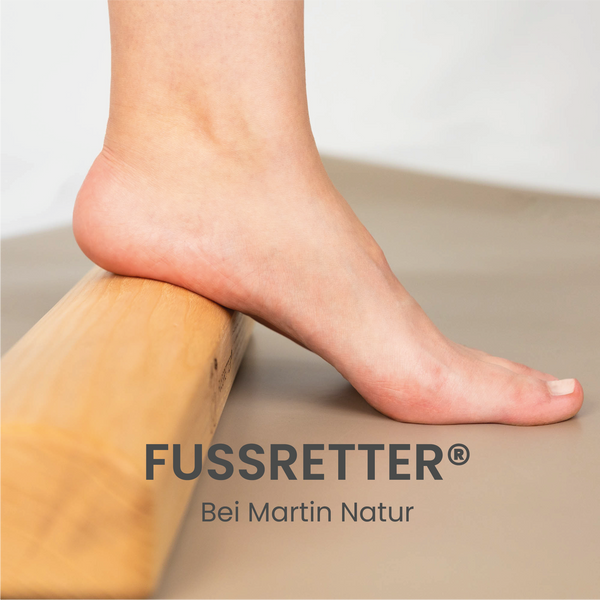
A suitable shoe takes away pressure, nothing more. The muscles between the toes can be trained additionally, for example with the Shapes training system or the Wooden foot retter. Both do not replace treatment, but keep the foot mobile. In case of pain that does not subside, or if the toe changes quickly, the foot belongs in the hands of a doctor.
Matching this
Read more about the topic of fit and foot health in our guides Walking flexibly, feeling better: why flexible soles are important for every foot and More comfort in everyday life: handy insoles for barefoot models. For the color choice: Shoes in burgundy for women: what the color suits and which models there are.